
Drivers across the country face longer wait times and higher friction when trying to schedule routine automotive maintenance or urgent repairs. When you attempt to find a Mechanic in today’s market, you are encountering the front lines of an unprecedented labor evolution across the automotive service industry. Vehicles have transformed from purely mechanical transport into complex supercomputers on wheels, requiring specialized electronic, software, and diagnostic expertise.
We observe how this technological shift impacts local service centers and fleet operators every day. The effort required to find a Mechanic who possesses both practical repair experience and advanced computer diagnostic skills has become a primary bottleneck for vehicle owners. According to recent industry projections from the TechForce Foundation, the automotive sector needs to recruit more than 150,000 new entry-level technicians over the next few years to replace retiring master technicians and satisfy consumer demand. This widening skill gap creates operational delays across independent repair facilities and dealerships nationwide.
What Is Driving the Growing Shortage of Qualified Auto Technicians?
Honestly, the reasons for this whole service mess go way past just “we can’t hire enough” type of issues. Today’s vehicle diagnostic steps ask for solid electrical know-how, plus software fluency, and specific shop instrumentation that the older training approaches didn’t really cover. And it’s not just one thing; it’s a stack of small problems that show up all at once.
- Faster retirement trends are hitting veteran master technicians, the folks with decades of real in-shop know-how who leave and take that institutional memory with them.
- Vehicle technology keeps getting more intricate; microprocessors, software sensors, hybrid power units, and advanced driver assistance systems are becoming normal, not rare.
- A long-standing shortage of structured, daily mentorship setups for newer technicians who are trying to break in and learn the trade the right way.
How Can Modern Training Tools Bridge the Technician Skills Gap?
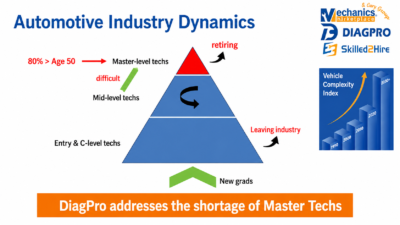
To solve operational slowdowns and fill service bays with capable workers, service centers must modernize how they train and retain talent. We know that modern service technicians cannot rely solely on legacy mechanical knowledge. They require continuous learning tools integrated directly into their daily shop workflow.
Through our Skilled2Hire platform, repair facilities deploy two specialized applications designed to accelerate career growth: TaskMentor and EdGame. TaskMentor provides step-by-step digital templates covering over 500 guided repair procedures, allowing newer technicians to complete complex jobs accurately while building verified career pathways. Meanwhile, EdGame delivers interactive 3- to 5-minute daily flashcard style trivia questions in a fun game style that prepare staff for ASE certifications and identify technical knowledge gaps early. Together, these tools elevate technician capabilities, reduce costly repair comebacks, and keep repair bays running efficiently.
What Does This Shift Mean for Vehicle Owners and Repair Shops?
When car owners look up local listings to find a Mechanic, they mostly want quick timelines, sharp diagnostics, and consistent workmanship that doesn’t fall apart a week later. Fixing the labor gap means helping the technicians already in place with real-time digital support, and also having clear development lanes they can follow. If service facilities swap outdated training for daily learning modules and digital task guidance, they can shorten the repair cycle, reduce service mistakes, and keep a more stable workforce over the long haul.
How Are Modern Workforce Solutions Changing Automotive Service?
The ongoing transformation within automotive repair demands modern solutions for recruitment, retention, and ongoing technical education. As vehicle hardware and software continue to evolve, repair facilities must invest in continuous learning platforms and structured workplace mentorship. Solutions provided by Mechanics Marketplace assist automotive businesses by pairing specialized recruiting services with digital training tools, helping repair facilities hire top talent and keep pace with technical innovation. Supporting shops that invest in their workforce makes it easier for every driver to find a Mechanic capable of servicing modern vehicles safely and efficiently.
Common General Questions
How has vehicle technology changed the skills needed by technicians?
Modern vehicles rely heavily on computer modules, complex wiring networks, and advanced software systems, requiring technicians to possess electronic diagnostic skills alongside mechanical knowledge.
How does TaskMentor help technicians on the job?
TaskMentor supplies step-by-step digital guidance for hundreds of repair procedures, helping junior technicians execute complex repair tasks accurately while tracking their professional skill mastery.
What role does EdGame play in technician education?
EdGame offers short daily flashcard style questions that gamify technical learning, allowing technicians to gain small amounts of knowledge daily, refresh critical knowledge, and prepare for ASE certifications – all in a fun and engaging way.
How does DiagPro help technicians on the job?
DiagPro is extremely valuable for mid-level technicians who want to diagnose efficiently with master-level accuracy and confidence. It also helps master technicians with very challenging car problems.
What should shop owners prioritize when hiring new service staff?
Shop owners should focus on candidates with strong foundational problem-solving skills, adaptability to new software diagnostic tools, and a commitment to ongoing technical education.